
Politics
PNQ: PM Ramgoolam Leads Crisis Response as Growth Could Fall Below 3%

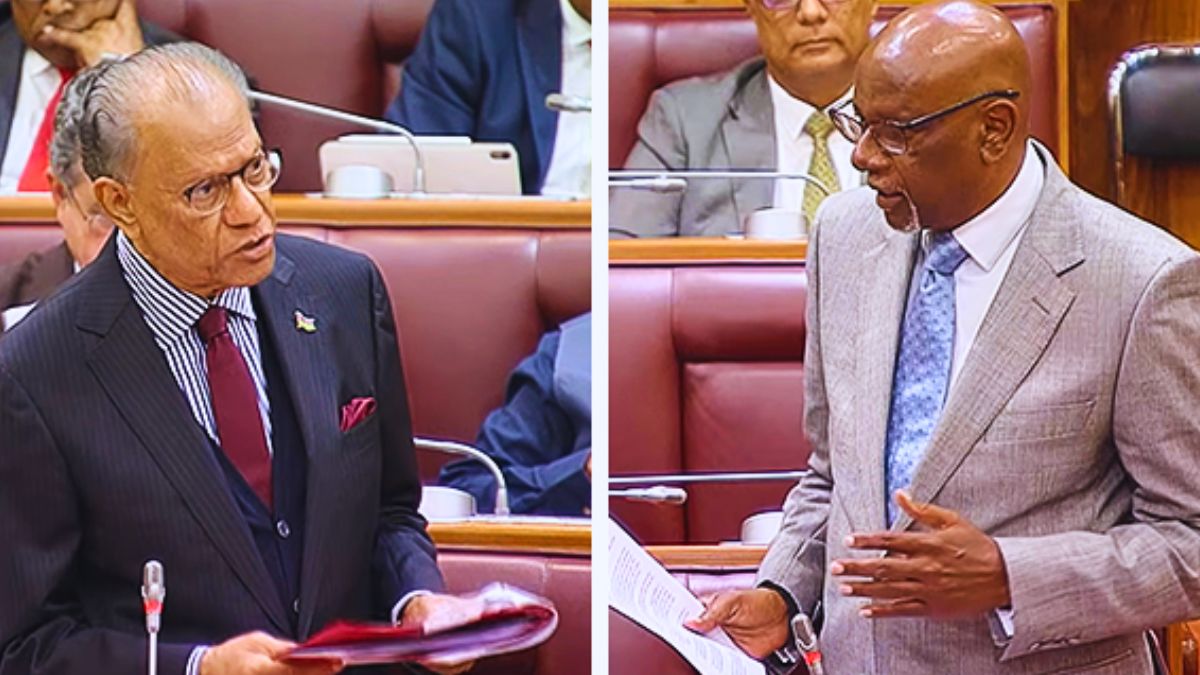
Prime Minister Navin Ramgoolam has delivered a sobering assessment of the Mauritian economy, warning that the escalating conflict in the Middle East necessitates “firm leadership” to navigate looming financial instability.
Addressing the National Assembly during a Private Notice Question (PNQ) from Opposition Leader Joe Lesjongard on Tuesday, 17 March, the Prime Minister revealed that national growth forecasts for 2026 are already under threat.
Initially projected at 3.4%, growth could slide below 3% if the crisis persists.
Economic Warning Signs
The Prime Minister detailed a multi-fronted hit to the island nation’s economy, driven by its heavy reliance on imports. Key economic indicators are currently under significant pressure:
- Inflation: Expected to jump from an original 4% estimate to as high as 6%.
- Tourism: The target of 1.45 million arrivals is now at risk.
- Current Account: The deficit is projected to widen from 4.8% to approximately 6% of GDP.
- Budgetary Pressures: A Rs 10 billion shortfall has been noted due to delays in ratifying the Chagos treaty.
In response, the Bank of Mauritius has begun intervening in the foreign exchange market to stabilise the rupee.
Emergency Repatriation and Diplomacy
The government has moved into a high state of diplomatic alert. A crisis cell and hotline were established to assist 228 Mauritians in the Gulf and Middle East regions.
To date, 121 nationals have requested repatriation from countries including Saudi Arabia, Qatar, Oman, Bahrain, and Kuwait.
Mr Ramgoolam confirmed that coordinated efforts with carriers such as Emirates and Air Mauritius have already facilitated returns via Dubai, Jeddah, and Nairobi.
One specific evacuation from Israel was managed through international coordination with India.
Securing Essential Supplies
Mr Ramgoolam sought to reassure the public regarding “energy security,” stating that the country holds sufficient fuel stocks for several weeks.
To mitigate future shocks, the government is exploring a government-to-government deal with the Indian Oil Corporation.
Notably, the Prime Minister revealed that payments for these supplies would be made in Mauritian rupees to reduce dependency on the US dollar.
On the home front, a Rs 10 billion stabilisation fund has been mobilised to subsidise essential goods as international food prices rise.
The Ministry of Health has also confirmed a six-month stockpile of essential medicines.
Strategic Oversight
A high-level committee under the Ministry of Finance, including representatives from Business Mauritius, is now monitoring the situation daily.
When pressed by the Opposition on the necessity of a full-time Finance Minister during this period, Mr Ramgoolam insisted the current climate requires “firm leadership capable of taking difficult decisions.”
The House has been adjourned until Tuesday, 24 March.
Source: l’Express