

Opinion
The “Sentinel” of Democracy: Jean-Luc Mootoosamy on the Future of Mauritian Journalism

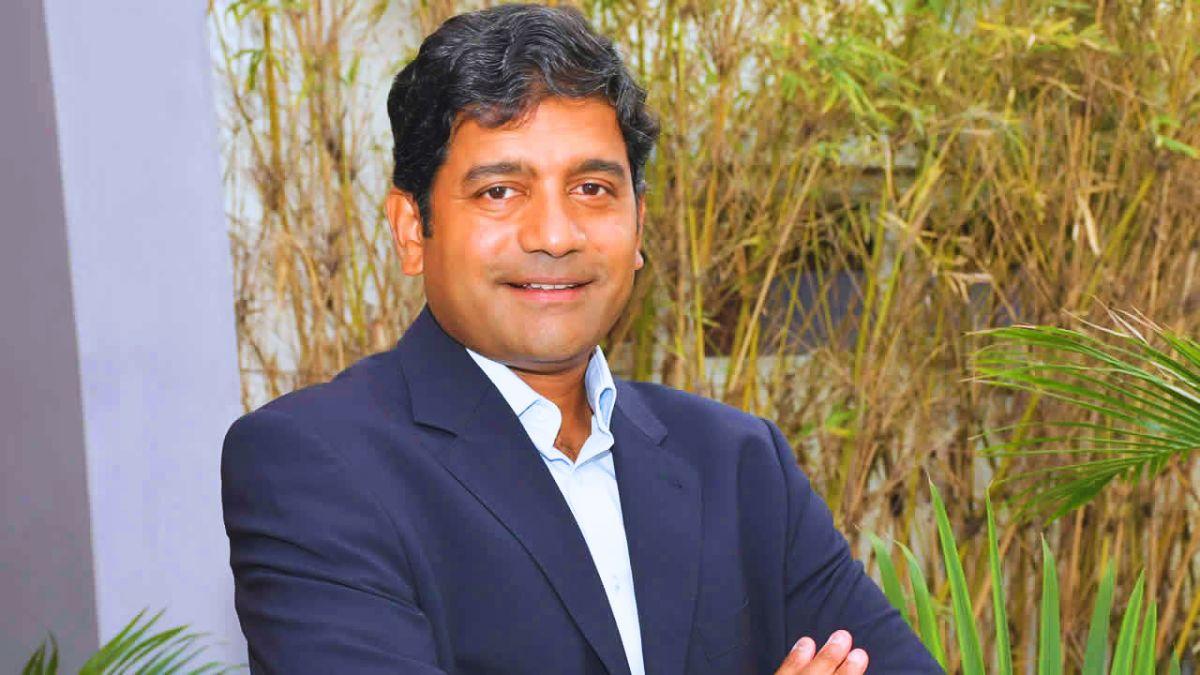
Strict legislation and a culture of confidentiality continue to hamper press freedom in Mauritius, despite journalists enjoying safer working conditions than many of their continental counterparts.
Speaking on World Press Freedom Day, Jean-Luc Mootoosamy, Director of Media Expertise, warned that a “rebuilding of trust” is required between citizens and the press.
He argued that the search for truth and the public interest must take precedence over official secrecy, particularly regarding national territory and the management of public funds.
The Burden of Antiquated Laws
Mr Mootoosamy highlighted the persistent influence of the Official Secrets Act, a piece of legislation dating back to the early 1970s.
He noted that the law is so outdated it still contains references to telegrams, yet it remains a significant hurdle for modern reporting.
According to the media expert, the Act is frequently used as a “cover” by civil servants and the authorities to maintain opacity.
While the law’s intended purpose is to protect the nation from hostile foreign intervention, it has instead become a tool for restricting information.
A Culture of Constraint
The Director observed that many media outlets have come to accept these constraints, often due to a fear of legal consequences. This environment of “impeded freedom” creates a daily challenge for journalists navigating:
- Official secrecy and confidentiality.
- The weight of existing legislation.
- The emerging challenges posed by Artificial Intelligence.
Regional Context and Responsibility
Despite these domestic obstacles, Mr Mootoosamy acknowledged that Mauritian journalists still maintain the ability to practice their profession “properly” when compared to colleagues across Africa who risk their lives daily.
The intervention comes as Mr Mootoosamy prepares to lead a training seminar on media responsibility at the Media Trust from 6 to 8 May.
The sessions aim to address the evolving role of the press in 2026 and the essential need to restore the bond between the media and the public.
Discover the full weight of the media challenges in this interview with Jean-Luc Mootoosamy.
Do you believe a journalist could circumvent the Official Secrets Act?
Yes. I would refer to the first duty of a journalist, as set out in the Munich Charter of 1971: “To respect the truth, whatever the consequences for himself, because of the public’s right to know the truth.”
It is our duty to seek out and uphold the truth on behalf of the public. The risks involved are clear. Truth is like water — it always finds a way through. The journalist is merely a conduit, a channel through which that truth can emerge.
The amendment to the IBA Act is one of the measures that diminished Mauritians’ sense of freedom towards the end of 2021.
There is also the “no comment”, often used as a shield.
In Mauritius, those who believe they wield power sometimes fall back on “no comment”, or phrases such as “ask your question anyway, there’s no tax on trying” or even “who are you?” — all convenient ways to deflect and move on quickly. Everyone is free to say what they wish, but “no comment” carries meaning in itself.
For a journalist, being told “no statement” is, in fact, a statement. Either the interlocutor genuinely has nothing to say, or there has been a directive to remain silent. In neither case should a “no comment” deter further inquiry — quite the opposite.
More often than not, “no comment” really means: “If I speak, there will be trouble.”
The Freedom of Information Act (FOIA) has been promised for decades. Is there not a real risk that, if introduced, it would be hollowed out by national security exemptions?
Journalists and the public are not naïve. This FOIA narrative has been staged and replayed countless times in Mauritius. In the region, Seychelles has had its Access to Information Act in force since 2018. We should draw inspiration from that.
Last November, in the National Assembly, in response to a question from MP Khushal Lobine, the Prime Minister indicated that such legislation is under consideration, with consultations planned.
Navin Ramgoolam also stated that national security would be a key factor. It is therefore to be expected that confidentiality will feature prominently in the law — which is, after all, meant to serve citizens.
Be that as it may, for journalists, whether information is classified or not, if it is in the public interest and does not, in good faith, endanger public safety, it must be open to scrutiny. This is a matter of transparency — and accountability.
Public funds, state resources, and the use of Mauritian territory are all matters of public interest, and good governance demands openness. Confidentiality cannot be invoked as a reflex, for it breeds doubt and erodes trust.
There is, at times, a confusion of categories. A distinction must be made between information and noise.
Navin Ramgoolam once pledged to repeal provisions of the IBA Act, particularly those concerning source confidentiality. Eighteen months on, nothing has changed. How do you interpret this inertia?
It would be redundant to remind the Prime Minister — known for his precise memory — that in late November 2021, while in opposition, he promised to repeal what he described as a “liberty-restricting” amendment “within the first week of forming government.”
Other priorities may well have intervened. But it is precisely this type of declaration and unfulfilled promise that undermines the credibility of politicians in this country.
This law must be revisited to allow radio broadcasters to breathe. Unless, of course, maintaining the status quo ultimately suits successive governments.
The amendment to the IBA Act contributed significantly to the decline in Mauritians’ sense of freedom at the end of 2021. It is time to reopen the debate and establish a less restrictive framework.
Has the Mauritian press become reactive — waiting for Facebook posts, press releases, and conferences instead of actively seeking information?
Fortunately, there are still journalists who conduct proper investigations — cross-checking sources, prioritising information, and publishing responsibly.
“Press release journalism”, “telephone journalism” that avoids the field, “opinion journalism” that comments on everything without groundwork — these have always existed, as has “press conference journalism” that merely reproduces statements and calls it reporting. Some settle for that.
But journalism is far more than that. It is a craft I strive to convey in training — its rigour, its discipline, and the profound satisfaction of work well done that can influence the course of a life, or even a nation.
Social media, particularly Facebook in Mauritius, may give the impression that traditional media are lagging behind. But caution is required. Social networks, press releases, and conferences are sources to be interrogated — not echoed blindly. Citizens expect more.
With the rise of communications agencies, some media outlets simply reproduce pre-packaged content without analysis or questioning. These are fundamentally different professions. When media do this, they risk surrendering their independence.
Between the pursuit of exclusives and voyeuristic excess, can press freedom exist without strict ethical boundaries?
This is a divisive issue within the profession — not whether to discuss it, but how. And as for exclusives, the public could not care less. Who remembers which outlet broke which story, and when? It is largely a matter of pride for journalists and media owners — and perhaps a marketing tool for advertisers.
What truly matters is reliability. The public remembers mistakes — and withdraws trust accordingly. What they seek are credible, authoritative sources.
As for voyeuristic tendencies — the obsession with grisly detail in murders, or live reactions from grieving families — it is deeply distasteful.
Editors may argue that this is what audiences want. I remain unconvinced. It does nothing to enhance the quality of information, and its prominence is wildly disproportionate.
There is a dangerous confusion between a taste for information and a descent into the gutter.
Media literacy is essential. Education more broadly is equally crucial, to ensure a solid grounding in general knowledge and a critical approach to information.
When a three-month investigation is reduced to a 24-hour buzz on Facebook before being buried, has investigative journalism become an unnecessary luxury?
There is, again, confusion between information and noise. Investigative journalism requires time, depth, and rigour to produce a coherent, substantiated report.
It remains essential — for citizens and for leaders, at least those who believe in democratic accountability.
Does the constant churn of scandals numb public outrage?
Some colleagues suggest that in Mauritius, one scandal replaces another and the public forgets. I disagree.
People do not forget — they lose faith in political action. They grow weary of those who excel at promises but falter in delivery.
Mauritians are waiting for their moment. Their revolution takes place at the ballot box — and its verdict is decisive.
Is the press harming itself by trying to match the speed of social media?
This is where media literacy becomes vital. Citizens must understand that content on social media carries risks of manipulation.
Not all allegations are false, but they do not always meet standards of impartiality. Hidden agendas are often at play.
The public also risks sharing content uncritically. Again, education is key.
As for the press, chasing social media is futile — those platforms will always be faster. And online, excess knows no bounds. Pages appear overnight, broadcasting graphic images simply to attract clicks. To follow them is to validate them.
The press must stay in its lane, adhere to its principles. It is running a marathon. These online pages are sprinting — and will soon run out of breath.
With artificial intelligence capable of writing, summarising, and even manipulating information, what will distinguish journalists from algorithms?
The crucial battle is one of discernment. The public must learn to filter what it consumes. We are in an era of disinformation, where content is deliberately crafted to influence events and distort reality.
AI’s capabilities grow daily. We face a choice: to adopt it responsibly and ethically, or to become dependent on it — eventually allowing it to think and write for us.
Discernment must also prevail among journalists and media owners.
Do we only defend press freedom when it echoes our own views?
That is the essence of journalism — otherwise it becomes communication, or even propaganda.
Citizens demand information, yet react with outrage when their interests, political figures, or idols are scrutinised. Reactions can be intense, even hostile.
We still have progress to make in accepting opposing views and engaging in genuine debate. Social media does little to help, as people tend to cluster with like-minded voices rather than confront differing perspectives.
In 2026, what is the real weight of press freedom in Mauritius?
Press freedom does exist, and the current government has pledged not to undermine it. The press serves to challenge authority and ensure accountability.
When things are going well, it is barely noticed. But in times of difficulty — as Mauritius is currently experiencing — its voice becomes more prominent. It provides a forum for debate and exchange. The 2024 elections demonstrated how media can help citizens grasp key issues.
I prefer to think of the press as a sentinel rather than a counter-power. It remains watchful, intervening when democracy is threatened.
The term “counter-power” risks conflating journalism with political opposition — they are not the same.
That said, many citizens have disengaged from traditional media. Trust must be rebuilt and maintained.
If the press disappeared tomorrow, would Mauritians feel less free?
The press is a resilient institution. Since 1773, Mauritius has had at least one daily publication without interruption. Yet nothing is guaranteed — its ability to operate freely could be weakened.
If it were to vanish, it is the most vulnerable — those without money, connections, or influence — who would struggle to be heard.
Social media has yet to prove its value as a tool of public interest. It enables expression, certainly, but that is not enough.
Among the many voices online, priority must be given to those who seek to inform rather than settle scores — those driven by the public good, openness, and meaningful debate, rather than narrow personal interests.
Source: Defi Media