

LIFE AND STYLE
Earth Could only Sustain 2.5 Billion People as Resources Face Potential Collapse

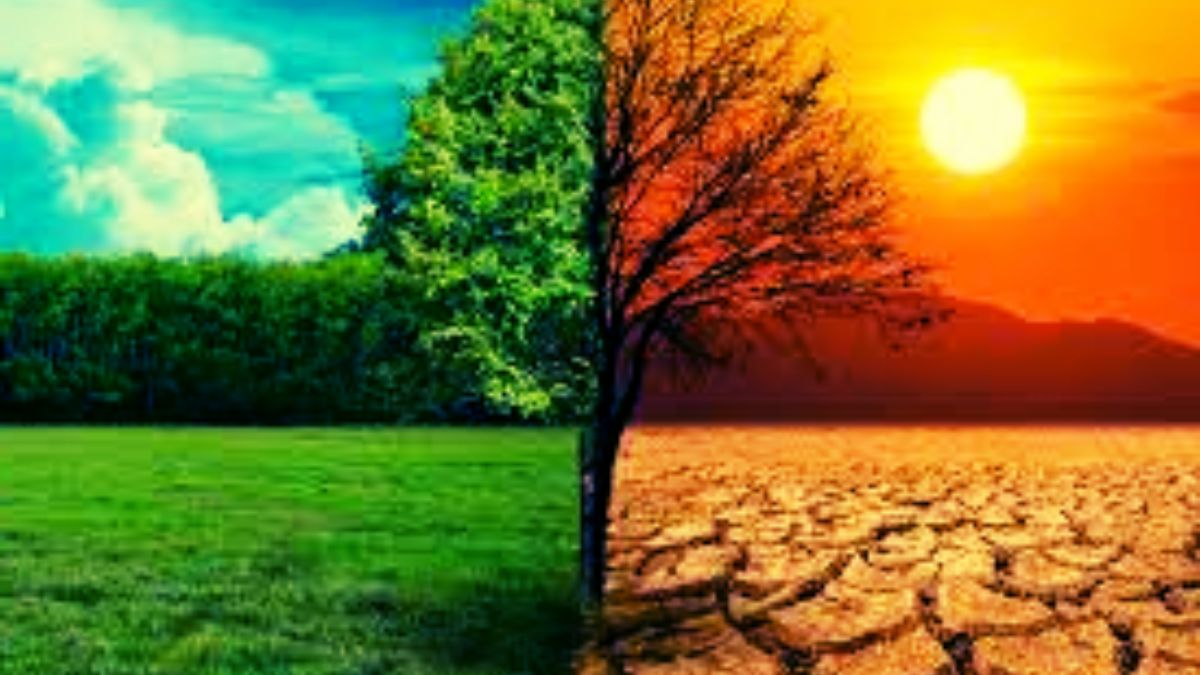
Future generations will hold today’s population in bitter contempt as accelerating global warming pushes the planet directly into an irreversible “Hothouse Earth” reality, according to critical data.
Experts warn that human survival does not hinge on ongoing conflicts in the Middle East or the unpredictability of major world leaders, but on a looming environmental collapse exacerbated by a global population that is already three times larger than the planet can sustainably support.
Critical Tipping Points Reached
Data from 2026 has identified critical thresholds and points of no return that render the current climate situation irreversible.
The impending arrival of the El Niño phenomenon is set to further disrupt the world’s oceans, which are already boiling.
Among the most pressing catalysts for cascade disasters is the melting of the Greenland ice sheet, an event releasing mammoth quantities of fresh water into the North Atlantic.
This disruption is guaranteed to trigger unprecedented precipitation and temperatures across the Northern Hemisphere.
Furthermore, the Arctic is melting faster than anticipated, automatically releasing methane and carbon dioxide that have been trapped for millennia.
The planetary crisis is compounded by interconnected environmental failures:
- Permafrost Thaw: As frozen ground melts, it releases vast amounts of methane and holds twice as much CO_2 as is currently present in the Earth’s atmosphere.
- Amazon Dieback: Human-driven deforestation for agriculture and timber has severely weakened the Amazon, traditionally viewed as the Earth’s primary lung for absorbing carbon dioxide. Plagued by droughts, the saturated biomass has begun releasing its stored carbon back into the atmosphere.
- Marine Ecosystem Collapse: Rising temperatures have triggered widespread coral bleaching and disrupted vital ocean circulation systems.
Forecasts for the timeline of warming vary slightly among prognosticators. Some estimate that by the year 2100, global warming will not exceed 5°C, while others predict a 3°C increase by the end of this century.
However, even the milder 3°C scenario guarantees major global impacts in the form of severe heatwaves, floods, and droughts. Consequently, 2027 is officially projected to be the hottest year in recorded history.
Political Inaction and the Anthropocene
The planet has officially entered the Anthropocene—a new era defined by human impact.
Experts state that environmental efforts over the last 50 years carry little weight against the sheer scale of current warming, noting that changes needed to be implemented on a far grander scale.
Instead, a short-term vision driven by an obsession with productivity and the growth of terrestrial resources, such as oil and gas, has pushed the exploitation of nature past its limits.
International forums, including various UN Climate Change Conferences (COPs), have failed to secure compliance.
Boundaries established at these summits have not been respected, and scheduled reductions in CO_2 emissions—deemed indispensable for human survival—remain profoundly insufficient.
Despite the urgency, global leaders are accused of turning a blind eye.
At a recent G7 environment summit, the world’s wealthiest nations completely omitted the topic of global warming from their agenda.
Sources reveal this omission was born out of fear of offending Donald Trump, who entirely disbelieves in the climate phenomenon despite overwhelming evidence.
The Overpopulation Crisis
Compounding the climate emergency is a stark demographic warning: according to demographers, the Earth is severely overpopulated.
The global population currently stands at approximately 8 billion people, but it is projected to climb to 12 billion by the late 2060s to 2070s.
Demographic estimates reveal that the Earth can realistically sustain only 2.5 billion inhabitants—just one-third of its current population.
A population of 8 to 12 billion will completely exhaust the world’s food resources, leaving the planet incapable of supporting modern consumption habits.
| Demographic Projections | Population Figures |
|---|---|
| Current Global Population | ~8 Billion |
| Projected Population (2060s–2070s) | 12 Billion |
| Maximum Sustainable Earth Capacity | 2.5 Billion |
Future management of essential resources presents severe logistical challenges. Global water supplies are already under heavy strain, with severe shortages plaguing various parts of the globe—a situation set to worsen over time.
Similarly, managing land and energy in all its forms to satisfy global demand is becoming unfeasible, following a 20th century where humanity heavily abused and overexploited these resources.
Technical Solutions Discovered to be ‘Nonsense’
While science historically rescued humanity by managing epidemics, extending longevity, and improving living standards, critics argue society has grown overly reliant on the comfortable belief that miraculous solutions will simply appear.
Prominent figures have proposed radical tech-driven remedies, but these are being dismissed by experts as absolute nonsense.
Billionaire Elon Musk, the richest man on Earth, has suggested transferring human populations to another planet.
Other figures are investing heavily in new technologies, including Artificial Intelligence (AI), which itself requires strict safeguards.
However, these technological safety nets face severe geopolitical and material limits.
For instance, China currently controls 90% of the world’s rare earth elements and has decided to halt sales to the United States.
Because AI becomes completely unusable without these specific rare earths, the tech-driven survival strategy is effectively crippled.
A Solitary Note of Optimism
Amidst the atmospheric chaos, scientists have confirmed one piece of positive news: the holes detected in the Earth’s ozone layer are now almost completely closed.
This rare success occurred because humanity managed to implement the necessary corrective measures in a timely manner, eliminating at least one major catastrophe from the current planetary crisis.
Source: l’Express