

News
Government Prepares Water Supply Restrictions as Major Reservoir Reaches 51% Capacity

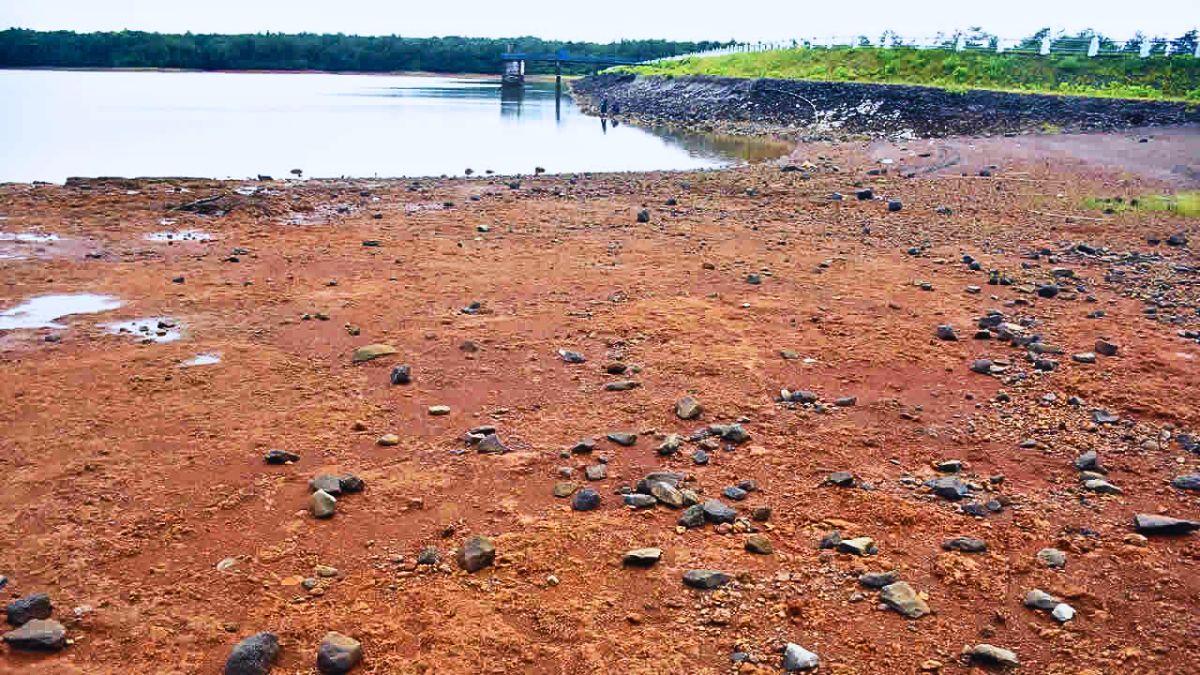
Mauritius is facing an imminent water crisis as the government prepares to enforce strict distribution cuts following a severe lack of rainfall.
Patrick Assirvaden, the Minister of Energy and Public Utilities, has ordered the Water Resources Commission and the Central Water Authority (CWA) to draft an immediate restriction plan.
The move comes after an inspection of the Mare-aux-Vacoas reservoir revealed it is currently at just 51% capacity—a staggering 34-point drop from the seasonal norm of 85%.
The Minister warned that continuing with “business as usual” would be “irresponsible,” as current projections suggest the reservoir could plummet to 22% by June.
At such levels, extraction becomes technically impossible due to the accumulation of mud and sediment.
A Long Winter Ahead
The situation is compounded by a bleak meteorological outlook. Lormus Jugoo of the Water Resources Unit noted that the “heavy rains” required to replenish reservoirs and groundwater failed to materialise earlier this year.
With the dry winter season approaching, relief is not expected until November.
The crisis mirrors the drought of 2025, with February 2026 already recorded as one of the driest months in over a century.
While the Mauritius Meteorological Services (MMS) clarified that the country is technically experiencing “low rainfall” or an “economic drought” rather than a total meteorological drought, the practical impact remains severe for thousands of households.
Infrastructure Vulnerabilities
Beyond the weather, officials have highlighted a “double vulnerability” within the national infrastructure.
Shyam Thanoo, Director General of the CWA, admitted that the water supply is precariously linked to the energy sector.
The pumps required to move water rely on heavy oil-fired electricity from the Central Electricity Board (CEB).
“A failure in energy could instantly worsen the water crisis,” Mr Thanoo warned, noting that while there are currently no power outages, the system remains fragile.
Proposed Solutions
To combat the shortage, the government has announced a two-pronged emergency strategy:
- Imminent supply cuts: Reduced distribution hours in specific zones, particularly affecting the Upper Plaines-Wilhems, Rose-Hill, and parts of the South.
- Waste management: Specific measures to curb wastage in high-demand sectors.
Looking toward long-term security, the government is exploring desalination.
Following a visit to successful infrastructure in Rodrigues, Minister Assirvaden suggested that similar desalination units could be deployed in Northern Mauritius to reduce the island’s dependence on increasingly erratic rainfall.
“The public must show understanding and avoid waste,” Mr Thanoo concluded, describing the current situation as “more than just a warning.”
Source: Defi Media