News
PRB: New 15.3 % Average Salary Increase Nearly Doubles the 2021 Pay Report

Public sector employees are set for a phased salary increase following the latest Pay Research Bureau (PRB) recommendations, though full payments will be delayed until 2027 due to economic constraints.
The Council of Ministers formally noted the 2026 PRB report on Friday, December 19, which outlines new salary structures and service conditions for the civil service, parastatal bodies, local authorities, and private secondary schools.
Under the new plan, eligible workers will receive 50% of the recommended increase starting in January 2026, with the full 100% implementation deferred to January 2027.
Narrowing the Pay Gap
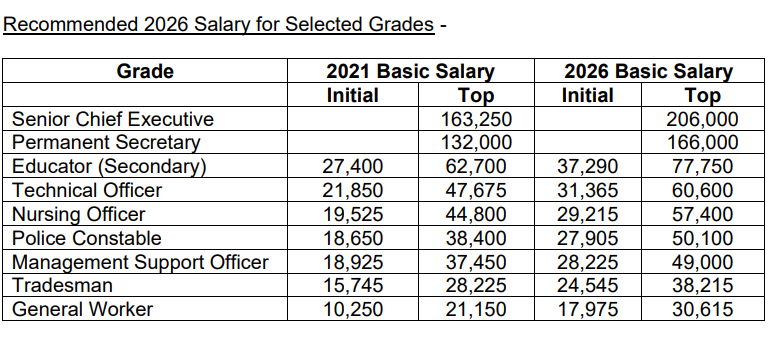
A key highlight of the 2026 report is the significant narrowing of the wage gap between the highest and lowest earners.
The salary ratio between a General Worker and a Permanent Secretary has been reduced to 1:5.4, down from 1:6.2 in 2021.
Additionally, the ratio between a General Worker and a Senior Chief Executive now stands at 1:6.7.
The weighted average salary increase, calculated against December 2025 gross earnings, is estimated at 15.3%—nearly double the 7.95% increase recorded in the previous 2021 report.

Economic Impact and Cost
The total annual cost to the State for these recommendations, which include the salary revision and the integration of a 5% interim allowance, is estimated at approximately Rs 10.9 billion.
Government officials cited a “particularly constraining” economic and budgetary climate as the primary reason for the two-phase rollout.
Despite these pressures, the PRB maintained that the adjustments are necessary to ensure “fair and reasonable” remuneration while remaining mindful of national financial capacity.
Core Principles of the 2026 Review
The PRB conducted extensive stakeholder consultations to address several critical factors affecting the modern public sector:
- Minimum Wage Alignment: Ensuring entry-level pay does not fall below the national minimum wage while correcting pay relativity distortions.
- Recruitment and Retention: Addressing the challenges of attracting and keeping qualified staff to maintain high-quality public services.
- Purchasing Power: Compensating for the loss of purchasing power experienced by workers.
- Performance and Equity: Upholding principles of transparency, competitiveness, and employee performance.
The report also factored in the monetary value of non-financial benefits provided within the total public sector compensation package.
Source: Defi Media