News
Mauritian Farmers Embrace Green Revolution in 3rd Phase of ‘Smart Agriculture’ Project

A major drive to transition the Mauritian agricultural sector toward sustainable practices has intensified, with local planters receiving expert training and financial backing to adopt eco-friendly farming techniques.
The Mauritius Chamber of Agriculture (MCA) has launched the third phase of its “Smart Agriculture” project, marked by a recent intensive training session on 30 March.
The workshop brought together 30 planters to master “agroecological farm management,” a system designed to reduce reliance on chemical pesticides and fertilisers while protecting the island’s biodiversity.

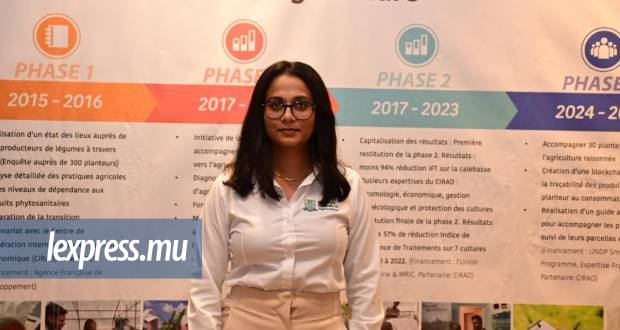
Financial and Technical Support
This latest stage, which officially commenced in April 2025, is supported by a funding package of approximately Rs 2 million.
The investment is spearheaded by the United Nations Development Programme (UNDP) via the Global Environment Facility, alongside the Mauritius Research Innovation Council (MRIC) and the ER Group through the Varuna project.
Mishtee Sumboo, project assistant at the MCA, noted that the funds are being utilised to help farmers acquire the necessary equipment for sustainable transitions.
“The feedback so far is positive,” Sumboo said. “Planters are participating actively and showing a real interest in evolving their practices.”
Strategic Objectives
The project focuses on several key pillars of modern farming:
- Input Optimisation: Reducing the use of water, synthetic fertilisers, and pesticides.
- Alternative Techniques: Implementing crop rotation, soil health management, and the use of insect traps.
- Resilience: Building a food production system that is environmentally respectful and economically viable.
By improving traceability and lowering chemical residues, the initiative aims to meet increasing consumer demand for healthier produce while boosting the overall productivity of local farms.
A Decade of Progress
The current phase builds upon groundwork laid over the last ten years. The project’s first phase in 2015 revealed an intensive and uncontrolled use of pesticides among 300 vegetable growers.
By the second phase in 2017, a network of 13 farms successfully tested methods such as mulching, composting, and the use of insect netting.
The results of these trials have been significant. Evaluations of 29 major vegetable crops showed an average reduction of 58% in the Treatment Frequency Index (TFI), with some crops seeing chemical use drop by as much as 77%.
National Vision
The push for greener fields aligns with the national agenda. In January, the Ministry of Agro-Industry and Food Security hosted the Assises de l’agriculture 2026, themed “Smart Agriculture for a Resilient Mauritius.
“ This ongoing collaboration, which also involves Expertise France and the Agence Française de Développement (AFD), continues to provide the technical and financial roadmap for a more resilient Mauritian food supply.
Source: l’Express