Opinion
Exam Chief Reports Stagnant 25% Primary Education Failure Rate Over 30 Years

The long-standing battle to improve primary education standards in Mauritius has hit a “stagnant” wall, with failure rates remaining frozen between 25% and 30% for over three decades despite successive government reforms.
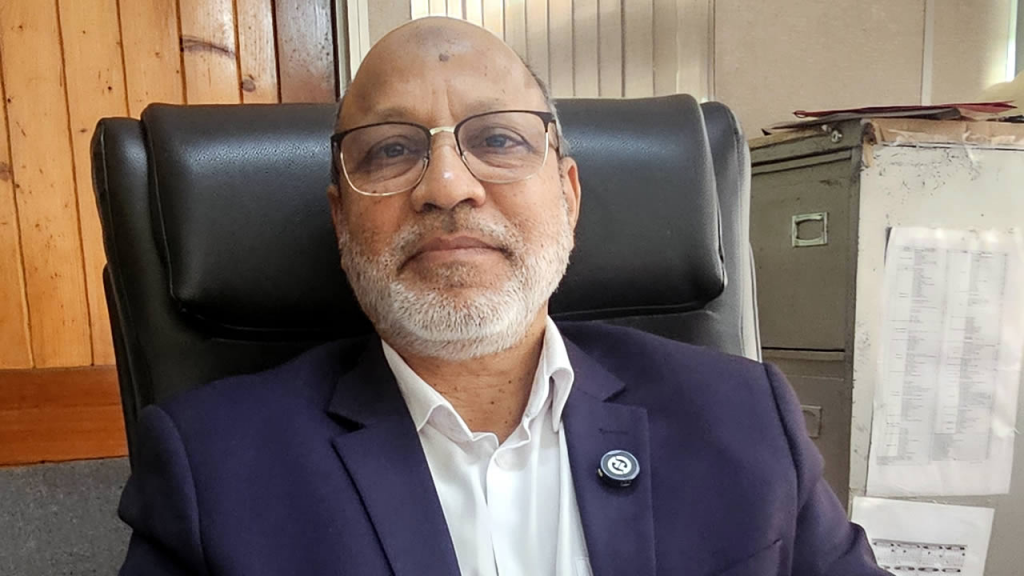
Dr Imtehaze Ahsun, the outgoing Officer-in-Charge of the Mauritius Examinations Syndicate (MES), issued the sobering assessment as he prepares to retire after 33 years of service.
He warned that a significant number of pupils are still failing to master basic literacy and numeracy skills after six years of primary schooling.

“One Size Fits All” Criticised
Dr Ahsun argued that the current system often confuses “equality of opportunity” with a “one size fits all” approach. He called for an urgent shift toward differentiated pedagogy to better support struggling students without stigmatising them.
“We should perhaps consider a differentiated programme and adapted pedagogy for them,” Dr Ahsun stated, reflecting on his career that began in 1993.
Security and Technology
While critical of academic outcomes, Dr Ahsun defended the integrity of the MES. Under his tenure, the body has tightened security measures—from paper preparation to result processing—to meet international standards and combat risks posed by social media.
The 65-year-old official, who holds a doctorate from the University of Bordeaux, noted that while the MES has faced public criticism regarding transparency, it remains bound by strict data protection laws.
The COVID-19 Challenge
Highlighting the resilience of the system, Dr Ahsun pointed to the 2021 national exams conducted during the COVID-19 pandemic as a “major challenge.”
Organising assessments in “red zones” and quarantine facilities required unprecedented coordination with police and transport services. The effort earned praise from Cambridge University, with one senior official noting that if the MES could handle COVID-19, it could handle any situation.
The Digital Future
Looking ahead, Dr Ahsun identified several key priorities for his successors:
- AI Integration: Exploring the use of Artificial Intelligence in exam organisation.
- E-Marking: Implementing electronic script marking for PSAC and NCE levels to improve precision and quality control.
- On-Screen Assessment: Preparing for the transition to digital exams, which has been moved from a 2025 start date to 2030.
Dr Ahsun, who rose from Examinations Officer to Deputy Director and eventually Officer-in-Charge, departs just days before the 2025 HSC results.
However, he dismissed concerns that his exit would create a void, stating: “The MES is a structured organisation. No organisation can depend on a single person.”
Source: Defi Media