

News
Mauritius Fights Invasive Beetle Species First Detected on 17 March 2025 in Gentilly

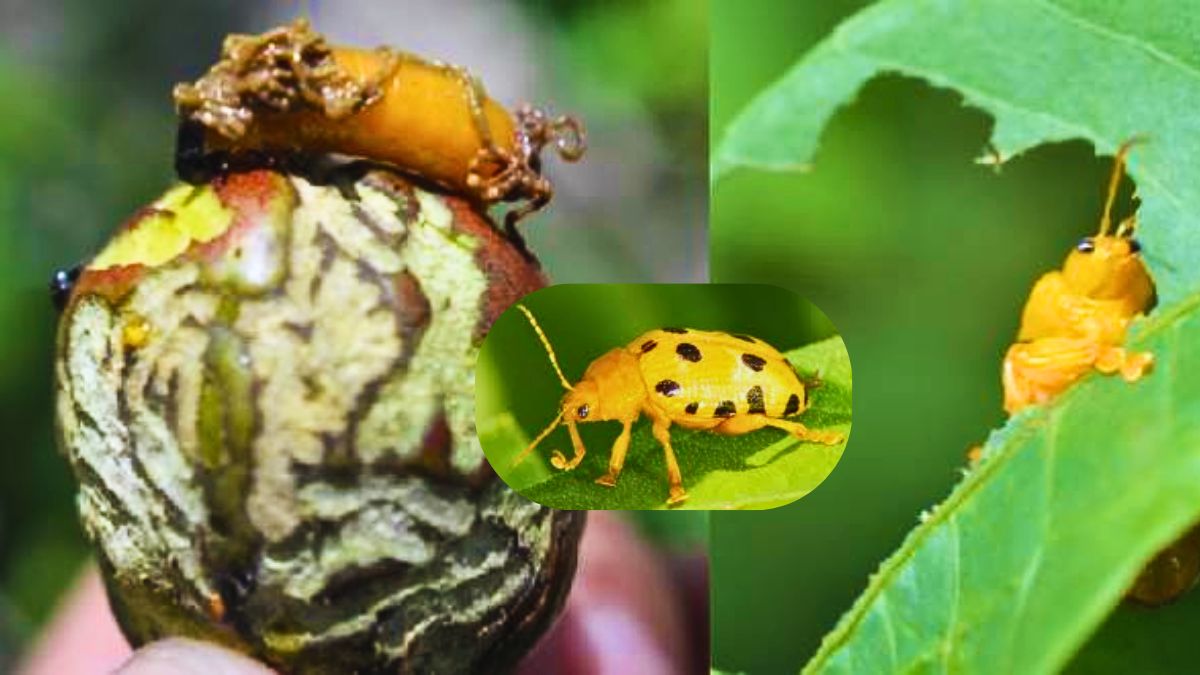
Agricultural authorities are preparing the controlled introduction of a natural parasite to combat an escalating invasion of the “hog plum beetle,” which now threatens the island’s Spondias dulcis (Ambarella) trees.
The pest, scientifically known as Podontia quatuordecimpunctata, was first detected in Mauritius on 17 March 2025, in the Gentilly region of Moka.
Since that initial discovery, reports of infestations have multiplied across the area, with gardeners witnessing rapid “skeletonisation” of foliage and trees riddled with holes.
Impact on Agriculture
The hog plum beetle, a brightly coloured leaf beetle, causes severe damage in both its larval and adult stages. By feeding aggressively on leaves, the insects trigger rapid defoliation, which:
- Weakens the trees by reducing their capacity for photosynthesis.
- Compromises fruit production over the long term.
- Leaves specimens “skeletonised” as the pests consume the soft tissue of the leaves.
Expert Intervention and Strategy
Drawing on proven strategies from South East Asia, agricultural services have outlined a multi-tiered response to halt the spread.
The recommended approach combines biological control with targeted chemical treatments.
Current guidance for local growers includes the use of the white muscardine fungus (Beauveria bassiana) and the introduction of predatory stink bugs, specifically Eocanthecona furcellata.
For more severe infestations, the following chemical interventions have been authorised:
- Neem-based products: Applied at a rate of 3 mL per litre of water.
- Lambda-cyhalothrin 5CS: A targeted insecticide applied at 0.5 mL per litre of water.
The long-term recovery of the prunier de Cythère (hog plum) now rests on the successful establishment of the aforementioned natural parasite, which officials hope will provide a sustainable check on the pest’s population.
Source: l’Express