
Tech
Mauritius Poised For 2nd Satellite Launch In Space Ambition Drive

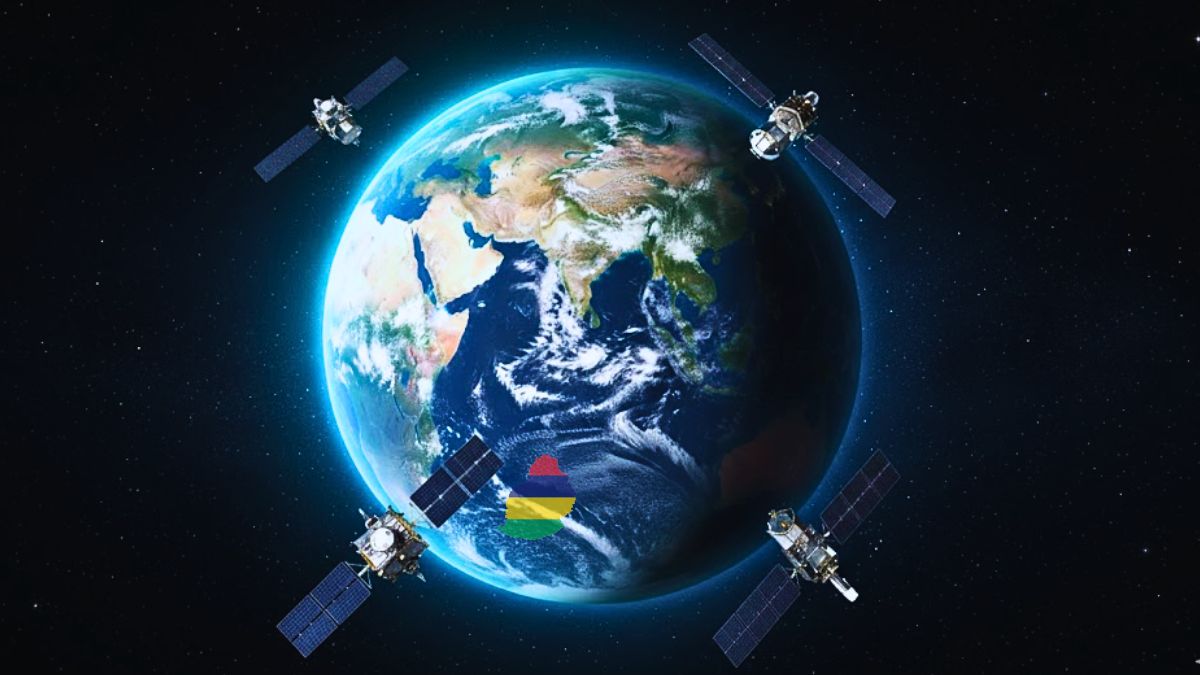
For the small island developing state of Mauritius, the vast expanse of the Indian Ocean has long defined both its beauty and its vulnerability. Hemmed in by isolation and increasingly at the mercy of extreme weather, the nation faces a unique set of existential hurdles. From the steady erosion of coastal management to the precarious balance of food security and disaster preparedness, the pressures of climate change are no longer distant threats, but daily realities.
In response, the Mauritian government is looking upward. Recognising that traditional methods may no longer suffice, officials have pivoted toward cutting-edge technology to bolster national resilience.
Space technology, in particular, has emerged as a cornerstone of the country’s strategic vision, providing vital new capabilities in Earth observation, maritime monitoring, and environmental oversight.
The driving force behind this celestial shift is the Mauritius Research and Innovation Council (MRIC).
By fostering local expertise in satellite engineering and data applications, the MRIC has cultivated a network of research and partnerships designed to harness space-based solutions for national development.
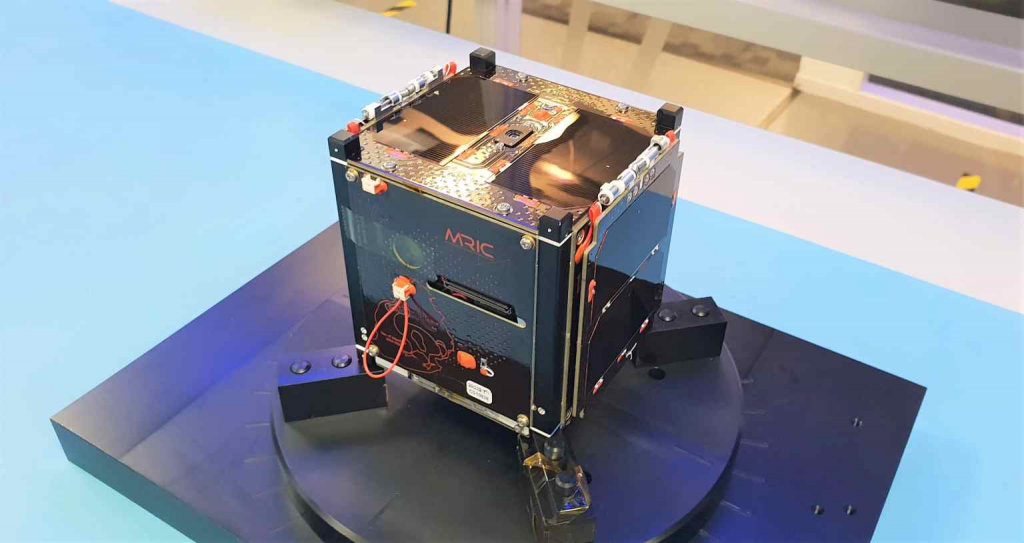
The journey hit a historic milestone in 2021 with the launch of the nation’s first nanosatellite mission.
This debut entry into the space sector was more than a symbolic gesture; it established essential national capacity and provided a masterclass in the fundamentals of space operations.
Beyond the technical achievement, the mission revealed the vast potential of satellite data to improve the lives and livelihoods of Mauritians while strengthening the island’s climate defences.
As the nation reflects on a landmark year, Dr Vickram Bissonauth, Research Coordinator at the MRIC, and Ziyaad Soreefan, Aerospace Engineer and Technical Lead, sat down to discuss the defining highlights of the Mauritius Space Programme in 2025 and the ambitious outlook for 2026.
Global Alliances and Coastal Tech: Scaling the Satellite Frontier
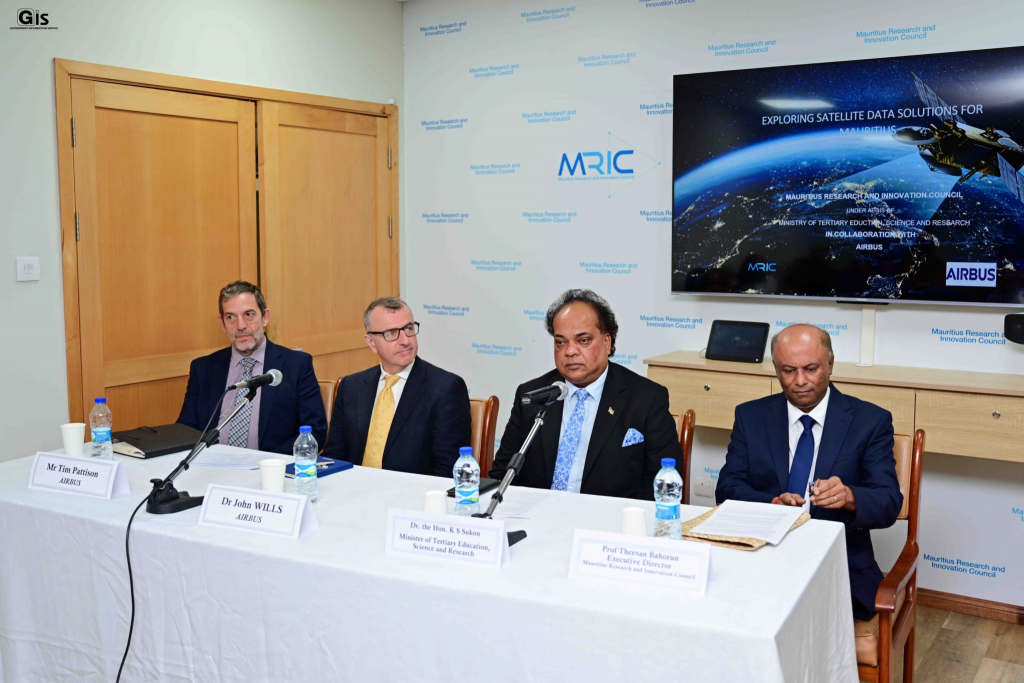
Over the past year, the Mauritius Remote Sensing and Infrastructure Centre (MRIC) has accelerated its aerospace ambitions through high-level partnerships with Airbus and the Indian Space Research Organisation (ISRO).
A pivotal workshop held in July 2025, in collaboration with Airbus, drew 70 delegates from the public and private sectors to examine how satellite data can tackle national emergencies.
Technical demonstrations highlighted the efficacy of 50cm high-resolution imagery for monitoring the Mauritian coastline.
To capitalise on this, MRIC is developing a national infrastructure platform to facilitate data downloads for local stakeholders, aiming to transition the council into the country’s primary satellite data provider.
Expansion plans are also on the horizon, with management currently reviewing a proposal for a strategic alliance with the Italian Space Agency.
The Joint India-Mauritius Satellite
The collaboration with ISRO has reached a critical juncture with the development of a joint 15kg microsatellite.
Currently in the Assembly, Integration and Testing (AIT) phase in Bengaluru, the satellite is expected to launch shortly via an ISRO launch vehicle.
This mission serves as a vital capacity-building exercise, with three Mauritian engineers currently undergoing hands-on training in India.
The satellite’s technical specifications include:
- Mass: 15kg.
- Dimensions: Deployable solar panels extending up to 1 metre.
- Payload: Multispectral imager with 11-15 km resolution.
- Orbit: Descending sun-synchronous orbit.
This will mark Mauritius’s second foray into orbit, supported by significant upgrades to the existing ground station established during the 2021 nano-satellite mission.
The facility now boasts faster tracking capabilities of approximately 5-6 degrees per second. Future enhancements to X-band infrastructure are planned to streamline the download of high-resolution payload data, complemented by an ISRO ground station in India.
Strategic Priorities and Economic Growth
Since 2022, the Mauritian ground station has provided telemetry and tracking services for ISRO missions.
MRIC intends to expand this “ground-station-as-a-service” model for commercial use, though the local “NewSpace” ecosystem remains in its infancy.
While global players like Eutelsat’s OneWeb have utilised Mauritius’s geostrategic location, local development is currently hindered by a lack of funding—a common hurdle across the African continent.
The programme’s primary objectives are tailored to urgent national requirements:
- Environmental Monitoring: Tracking flash floods, landslides, and coastal erosion through time-series data.
- Maritime Security: Enhancing surveillance to detect illegal fishing.
- Socioeconomic Development: Fostering a new growth sector through R&D and academic programmes.
To bridge the gap between raw data and practical application, MRIC is exploring the use of artificial intelligence to provide “decision-ready” insights for land-use planning and maritime management.
Looking to the Heavens: The 2026 Roadmap for Mauritius’s Space Ambitions
As Mauritius prepares to navigate the coming year, the Mauritius Research and Innovation Council (MRIC) has set out a rigorous agenda to ensure the nation’s space programme remains a vital tool for national survival and growth.
At the heart of the 2026 strategy is a clear commitment to tackling the climate crisis; the MRIC plans to finalise one or two major research proposals for submission to climate financing funds.
This move underscores a growing global recognition that for small island developing states (SIDS), space technology is no longer a luxury, but a critical necessity for addressing environmental vulnerabilities.
Diplomacy and human capital are also high on the priority list. Engagement with the Italian Space Agency remains a key focus, with officials looking to finalise upcoming meetings to explore new collaborative frontiers.
Back on home soil, the MRIC is moving to bolster its “brain trust” by recruiting additional space scientists.
This recruitment drive aims to meet the surging demand for local expertise as the island’s celestial initiatives continue to scale.
Infrastructure and Data Sovereignty
A significant shift in the programme’s technical maturity will be marked by the launch of a dedicated data platform and repository.
This infrastructure is designed to streamline access to satellite data for government bodies and key stakeholders, moving the nation toward a more data-driven governance model.
To ensure these tools are effective, the MRIC will also conduct an analysis of how research organisations are currently utilising this data, identifying successes and areas where satellite applications can be refined.
A Voice on the Global Stage
Beyond its territorial waters, Mauritius is ensuring it has a seat at the table of global space governance.
Through its active participation in the UN Committee on the Peaceful Uses of Outer Space (COPUOS), the nation has formally registered the specific concerns of SIDS in official international documents.
By doing so, Mauritius is ensuring that the unique challenges and perspectives of small islands are not lost in the broader conversation of space exploration.
For a nation once defined by its geographic isolation, 2026 promises to be a year where Mauritius uses the ultimate high ground to secure its future.
Source: SPACE IN AFRICA