
News
Mauritius Hosts High-Level Summit in 2026 to Bolster Regional Customs Security

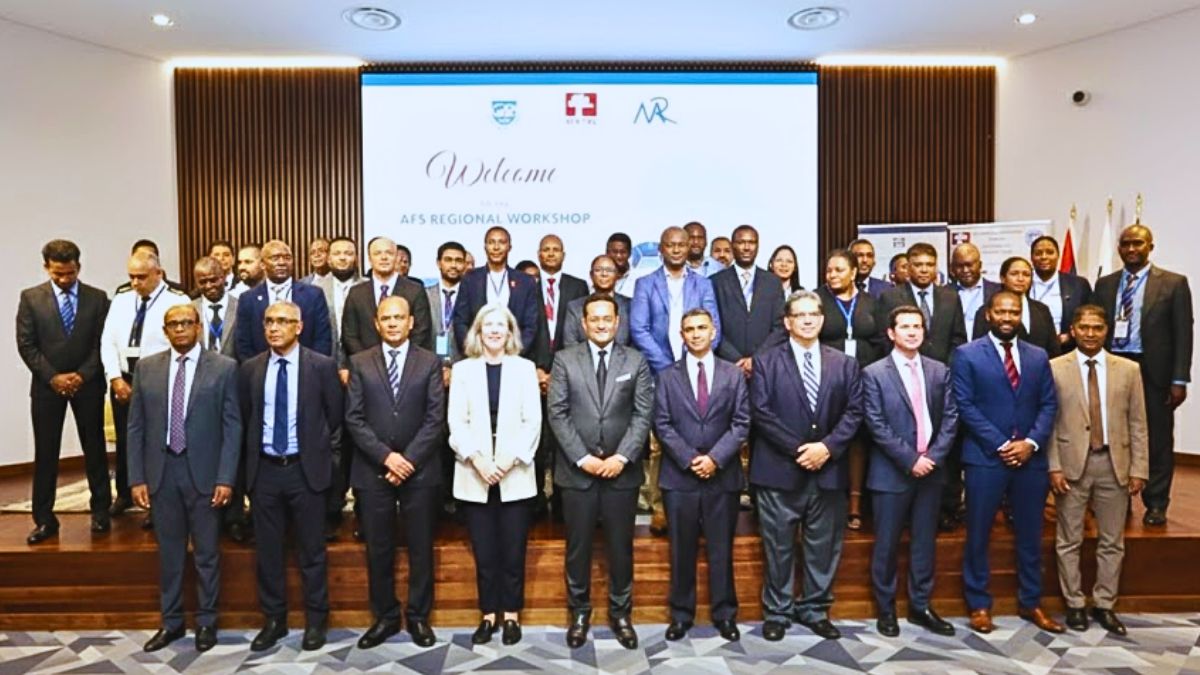
Mauritius has positioned itself at the forefront of regional security and economic reform by hosting a major international seminar aimed at revolutionising customs compliance across developing and emerging economies.
The five-day event, titled “Developing a Risk-Based Compliance Plan for Customs,” commenced on Monday, 2 February, at the Integrated Customs Clearance Centre (ICCC).
Organised by the Mauritius Revenue Authority (MRA) in partnership with the International Monetary Fund’s AFRITAC South, the summit brings together customs officials to adopt an Integrated Risk Management (IRM) approach to border control.
Economic Pillars for 2026
Opening the seminar, Junior Finance Minister Dhaneshwar Damry declared 2026 as the “Year of the Economy” for Mauritius.
He emphasised that job creation and capacity building are the essential pillars of the government’s strategy for sustainable growth.
“Consolidating our capacities remains fundamental to stimulating inclusive economic development, both nationally and across the African continent,” Mr Damry stated.
He further reaffirmed the nation’s “uncompromising” commitment to international standards of transparency and financial integrity, specifically citing the Financial Action Task Force (FATF) evaluation process.
Addressing Global Threats
The seminar arrives at a critical juncture as global trade faces increasingly complex supply chains and transborder threats. The IRM framework is designed to help customs administrations balance three competing priorities:
- Rigorous Control: Ensuring national security and revenue protection.
- Trade Facilitation: Speeding up legitimate commerce.
- Voluntary Compliance: Encouraging businesses to follow regulations.
Australian High Commissioner Kate Chamley highlighted the importance of domestic revenue mobilisation in building economic resilience, noting that peer-to-peer learning is vital for the long-term strength of customs institutions.
Data-Driven Enforcement
The scale of the challenge was illustrated by MRA Director-General Rohit Ramnawaz, who released operational figures from 2025 to justify the shift toward risk-based interventions.
Last year, Mauritius validated 356,645 customs declarations, with over 46,000 requiring physical or x-ray examination.
The effectiveness of current targeted interventions was underscored by the interception of over one tonne of dangerous drugs in 2025, with an estimated street value of MUR 8.4 billion.
A Regional Knowledge Hub
Sukhwinder Singh, Director of the IMF’s Africa Training Institute and AFRITAC South, lauded Mauritius as a “key partner” in Sub-Saharan Africa.
He praised the country for sharing its expertise to help neighbouring nations implement practical, risk-based reform plans.
The seminar is scheduled to conclude on Friday, 6 February, with delegates expected to return to their respective administrations with new blueprints for institutional transformation.
Source: Defi Media