
Business
Mauritius IFC Funnels $80 Billion Into Africa To Drive Continental Growth

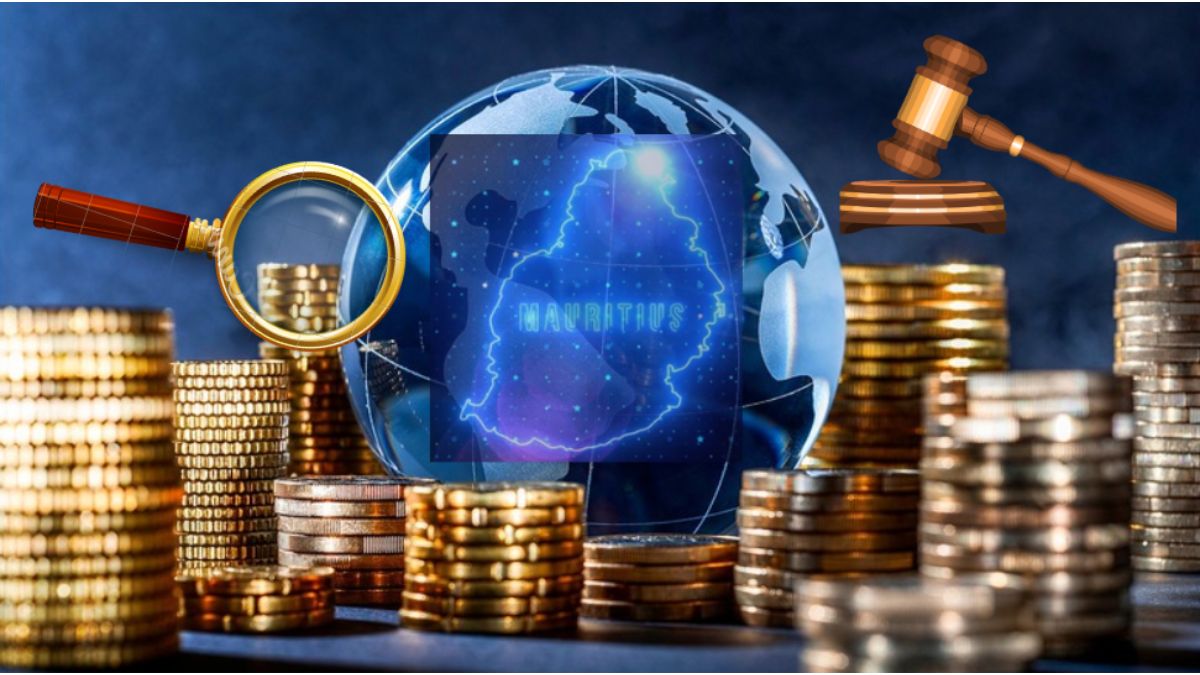
Mauritius is reasserting its dominance as the primary gateway for global capital entering Africa, with new data revealing the island nation has funnelled more than $80 billion (Approx. MUR 3.6 trillion) into the continent since 2010.
During a high-level panel discussion hosted by CNBC Africa on 23 October 2025, industry leaders highlighted that the Mauritius International Financial Centre (IFC) now contributes over 13.4% to the nation’s GDP.
The hub serves as a critical “conduit” for 450 global investment funds and major multilateral institutions, including the World Bank and the International Finance Corporation (IFC), which use the jurisdiction to de-risk African investments.
Based on the comprehensive details from the 2025 CNBC Africa panel and recent economic data, here is the detailed report on Mauritius’ strategic evolution as Africa’s premier financial gateway.
1. The Legal and Regulatory Fortress
Confidence in Mauritius is anchored in a robust, hybrid legal framework that offers investors a “safe and effective” environment for risk mitigation:
- Hybrid Legal System: Combines British common law and French civil law.
- Highest Court of Appeal: The Judicial Committee of the Privy Council in the UK, providing a gold standard for impartial dispute resolution.
- International Standards: Laws are modeled on the UNCITRAL Model Law, with enforcement of foreign arbitral awards based on the New York Convention.
- Investment Protection: Supported by a vast network of Double Taxation Avoidance Agreements (DTAAs) and Bilateral Investment Treaties.
2. A Bridge for Global Capital
Panellists described Mauritius as more than just a tax-neutral hub; it is an infrastructure provider for “mobilising capital.”
- Inward Investment: Since 2010, Mauritian-domiciled funds have channeled over $80 billion into Africa.
- Multilateral Support: Major institutions like the World Bank and the International Finance Corporation (IFC) use Mauritius to de-risk their African portfolios.
- Case Study: A single investor looking to deploy $100 million can use the Mauritian banking hub—which features 19 resilient banks—to split and manage allocations into diverse markets like Rwanda, Nigeria, and South Africa seamlessly.
3. Wealth Migration and Property Trends
Mauritius has become a magnet for High-Net-Worth Individuals (HNWIs), driven by lifestyle and the “business-from-anywhere” ecosystem.
- Wealth Statistics: The island is currently home to approximately 5,000 millionaires and 15 centi-millionaires (individuals with a net worth over $100 million).
- Wealth Growth: This demographic has grown by 87% over the last decade.
- Property Dynamics: Property is increasingly seen as a “lifestyle” investment rather than mere bricks and mortar. Interestingly, local Mauritian participation in the home-buying market has increased to 11%, up from 4% just three years ago.
4. Innovation and the Future: Fintech & ESG
The jurisdiction is preparing for its next leap into Fintech and Impact Investing, aiming to become the “Silicon Valley of Africa.”
- Regulatory Sandbox License (RSL): A flexible framework allowing innovators to test digital assets, crowdfunding, and peer-to-peer lending under regulatory supervision.
- Sustainable Development: Aligned with the AU Agenda 2063, the IFC acts as a conduit for projects with social impact, such as distributing water across Africa or assembling electric scooters in Zimbabwe.
- Demographic Dividend: With Africa’s population projected to reach 2.4 billion by 2050, the IFC is positioning itself to capture the rise in household consumption, expected to hit $2.2 trillion.
Key Economic Indicators (2025-2026)
| Indicator | Data Point |
| Financial Services GDP Contribution | 13.4% |
| Number of Banks | 19 |
| Millionaire Population Growth | 87% (last 10 years) |
| Total Africa-bound Investment (since 2010) | Over $80 Billion |
| Projected African Population (2050) | 2.4 Billion |
Source: CNBC Africa